Conditions We Treat
- Plantar Fasciitis
- Myofascial Pain
- Chronic Tendinopathies
- Achilles Tendinopathy
- Patellar Tendinitial
- Gluteal Issues
- Tennis Elbow
- Golfers Elbow
- Adductors
- Proximal Hamstrings
- Distal Biceps
- Calcific Tendinopathy
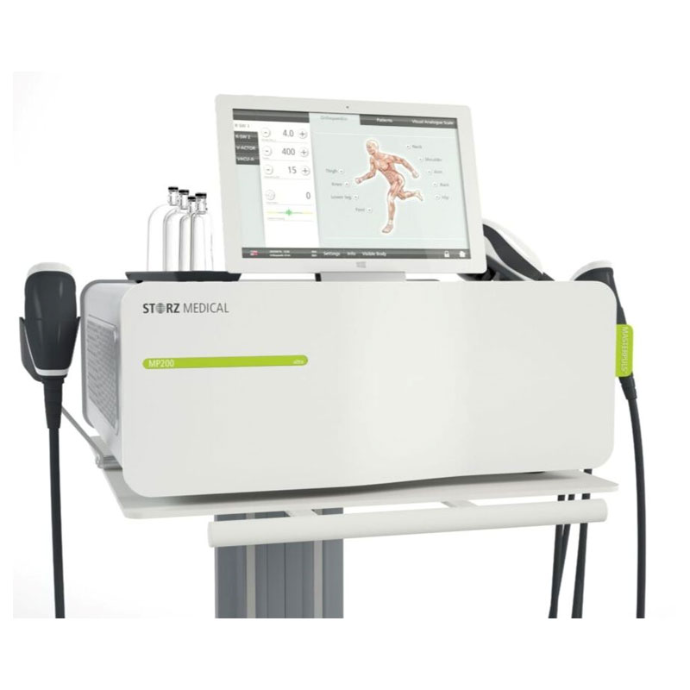
Radial Extracorporeal Shockwave Therapy
Is an evidence based treatment that involves passing low energy pressure waves into damaged tissues to increase blood flow and stimulate the repair process while reducing pain and allowing your body to restart its own natural healing process.
How does Shockwave Therapy Work?
Shockwave therapy was developed in Germany during the late 1960s. Researchers began studying the effects of shockwaves on the human body and discovered that they affected different parts of the body in different ways: For example, electricity had little effect on fat but proved dangerous to the brain and the lungs. At this point, it was mostly used to break up painful kidney stones to make them easier for patients to pass.
In the 1990s, scientists began to study the effects of high-energy shockwave therapy on soft tissue injuries. Both high-energy and low-energy shockwave treatments work by sending pulses of energy to the injured area.
Shockwave therapy may be used to:
- Increase circulation around injured soft tissues
- Break down calcified deposits (like kidney stones)
- Stimulate cells that generate new bone tissue and connective tissue
- Reduce pain by overstimulating nerve endings in the affected area
Shockwave Therapy Benefits
Shockwave therapy uses have grown in number since this treatment was invented more than 50 years ago, and researchers continue to discover new ways to use low-energy shockwaves to help patients deal with pain and regenerate tissue. If you have a musculoskeletal condition, you could benefit from extracorporeal shockwave therapy in the following ways:
It’s non-surgical. You can continue to live your life while you receive shockwave therapy for plantar fasciitis, bursitis, or tennis elbow instead of setting aside time for a lengthy surgical recovery. Practitioners usually start patients on a trial run of two or three sessions. If there’s no improvement after this point, they’ll help you reevaluate whether this is the right treatment for your condition.
Shockwave therapy can also be combined with a physical therapy program to get injured people back to work — or playing their favorite sport — faster. It's an ideal treatment for athletes who do not yet want or need surgery for chronic pain or injuries.
It may help tough cases heal. Any type of tendinopathy can put you out of work for weeks at a time. At the very least, this type of nagging (and sometimes severe) pain can restrict your participation in hobbies and work. If your tendons are damaged, your doctor may begin with more standard, conservative treatment like nonsteroidal anti-inflammatory drugs while you undergo physical therapy. If PT doesn’t work, your practitioner might offer you a steroid shot.
Cases of tendon injuries that don’t respond to such treatment, though, may frustrate both physicians and patients. Plantar fasciitis, as one example, is a chronic condition that can be difficult to treat and causes patients a lot of pain. It often requires more than NSAIDS and rest but is also usually not severe enough to require surgery.
Shockwave therapy offers a middle-ground treatment that helps the soft tissues regenerate. Shockwave therapy has also been FDA-approved as a treatment for lateral tennis elbow and plantar fasciitis, giving patients hope.
